Words Have Power

INTENTIONS | 4.3.2021
Dear Herders,
Greetings to spring and the return of green hills, from where I write today. I hope you are all hanging in there, after another month with a series of heavy events in the news. Lots of love to the Asian-American and Pacific Islander communities who have been recent targets of hate crimes and racialized violence in America. Of course, more than love is needed during this time. Action & accountability are overdue. There are also several insightful articles in the “Happenings” section for more discussion and actions you can take to stop AAPI hate, as well as learn more about incidences reported since 2020.
This issue of The Herd is packed—it always seems to be. I hope you take your time with an incredible interview with the poet Georgina Marie, whose two chapbooks and third manuscript in the works offer vulnerability, wisdom, and solace. In our Quick Lit Review, I discuss a new book coming out from Elyssar Press called The Beirut Call: Harnessing Creativity for Change. We also have a prompt that I hope you enjoy. Lastly, as of today, we only have two artists sharing work in the upcoming June issue. The June issue is an OPEN CALL for all Herders to submit their work.
What are you thinking about, photographing, deconstructing, or creating? What are you not creating? Submit your art, short stories, studio glimpses, musings, unfinished poems, etc. Please include a brief artist bio with your submission, as well as titles of your art (if applicable). Thank you to several Herders for letting me know the previous link was broken on submitting work—my apologies about that.
And now, our April/May issue—as always, I am grateful for your time to read The Herd. Please feel free to leave comments below on what moves you, challenges you, and motivates you.
Here’s to spring,
Allie

CREATIVITY CRUSH | 4.3.21
Georgina Marie on how claiming the identity of a poet “changed my life as a writer.”
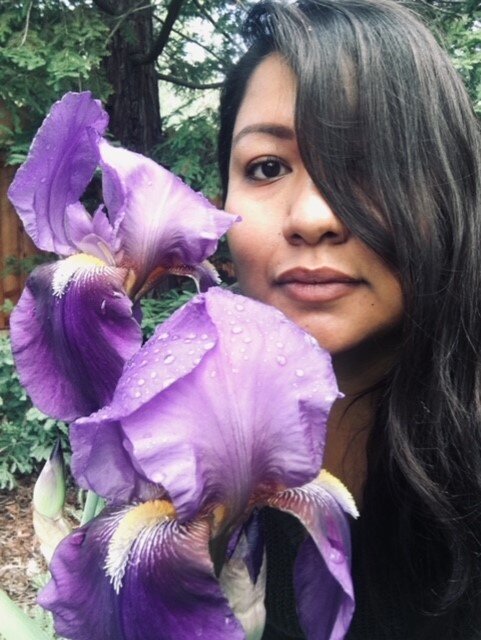
Georgina Marie is a poet from Lakeport, Northern California.
Georgina Marie is a poet from Lakeport, Northern California, where she resides with her two dogs, Kenya and Micco, and her cat, Mistie. She is the Lake County Poet Laureate for 2020-2022, and the first Mexican-American and youngest person to serve in this role for Lake County. Georgina has a melodic way with words, which you can appreciate in both of her published chapbooks, available for purchase here. Last year, a new poetry radio show stemmed from Georgina’s biweekly column, “Rooted in Poetry.” Tune in on Saturday, May 1st from 4-5 PM PST here, or listen on KPFZ at 88.1 FM if you’re local to Lake County.
With two chapbooks published and her first full-length poetry manuscript in the works, Georgina writes in a way that renders entire worlds for readers to dissolve into and emerge stronger and softer for it. Her naturalist tendencies as an avid birder shine in her writing. Georgina is a poet who is comfortable to pause long enough in nature to encounter the quieter sides of grief, loneliness, and vulnerability. Finding The Roots of Water is partly “an exploration of living in a county devastated by wildfire” as well as a larger rumination on “grief and loss.” Tree Speak offers an introspective look into the soul, while the poems themselves center around “the observance and witnessing of trees.”
Please see the end of this interview for her additional ways to connect with this incredible writer, whether via Instagram, Facebook, or Twitter. In the meantime, enjoy the interview below—and share with a friend if you feel moved to do so.
“Only a question of how
tree can birth a poem
and how a poet
never stops thirsting”
The Herd: So, Georgina, how has your role as Poet Laureate of Lake County (2020-2022) changed your thoughts about poetry and writing, if at all? What do you love most about being Poet Laureate? What is the most challenging part?
Georgina Marie: It has definitely increased my belief in the power of poetry in our culture and communities and how writing allows us to voice not only our gratitude and beauty but also our injustices. I was appointed Poet Laureate right as the COVID-19 pandemic impacted my county and it halted most if not all of the plans I had—but I didn’t let that stop me; the poets and writers in my community followed suit. We still gathered virtually to read and write poetry, share our work, and meet new people, and we continue to do so.
The poetry stemming from this time of COVID expresses isolation, pain, loneliness, racism, love, nature and animals, and so much more. I love the sense of being a leader, change-maker, and initiator in my community, and being able to make certain projects happen which may not otherwise happen if I didn’t have the title. All of this combined is what I love most about being a poet laureate. It’s such an honor to be a poet laureate especially in a time where the poet laureate role has been elevated after Amanda Gorman’s important performance at the presidential inauguration.
The most challenging part is not necessarily having support from former poet laureates in my county; some have moved, some have medical limitations, some are not open to virtual technology, and some are just not interested or have resigned from their emeritus titles. I’ll be honest in saying I am an introverted, people pleaser so sometimes I face criticism that isn’t exactly fun to experience.
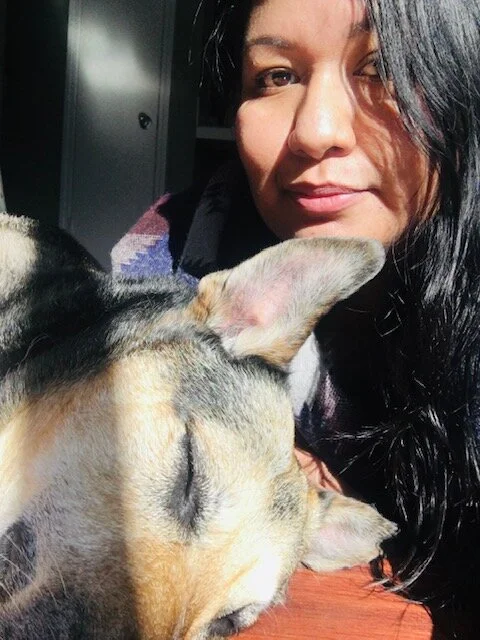
“I just encourage any poets, writers, artists, anyone really reading this to take care of you. Reach for your dreams, work hard for them, but also let yourself rest and acknowledge your accomplishments no matter how small. This is something I have to remind myself sometimes, so I want to remind others too.”
-Georgina Marie, poet & Poet Laureate
The Herd: Can you tell us a little bit about your personal process of writing? Were you always writing? At what point did you say "I'm a writer" or "I'm a poet?"
Georgina Marie: I’ve been writing since I was about 15 years old, after learning about Sylvia Plath by a college English teacher. I then wrote for so many years but I didn’t claim the identity of being a poet until about 17 years later and once I did, it changed my life as a writer. I had the motivation and passion to truly pursue a life of writing.
My process now as a writer is not being too hard on myself on days I don’t write and to write when it comes to me. I dedicate most Saturday mornings to working on my poetry manuscript. I often write lines in my iPhone Notes app when I’m going about my day or if I’m working and come back to those lines later to craft a poem. As author Nicole Gulotta calls it, I “write in the margins” of time.
The Herd: You are a self-described bookworm. Any latest reads you're loving?
Georgina Marie: Total bookworm and I have so many stacks in my home. At the end of December in 2020, I read Dresses from the Old Country by Laura Read and really enjoyed her poems. I’m re-reading The Carrying by Ada Limon and love it of course. I’m also reading American Birds: A Literary Companion which I’m very interested in as I am a bird watcher, often spending time watching the birds in my backyard oak trees and at local parks so I like learning and reading more about them in poetry.
The Herd: Are there any other artists whose work you'd like to give a shout-out to right now?
Georgina Marie: Wow, where to start! You for starters, Allie! And not just because you are featuring me in this beautiful newsletter but because I admire your poetry, your nature-based workshop focus, and the aesthetics you also put into your poetry, website, and newsletter which ultimately creates such a lovely brand. Ada Limon is my favorite modern poet; she inspires me immensely and I’m so excited to be taking a workshop with her in April (my birthday month!) so I have to give her a shout out.
I also greatly admire some of my dear friends and acquaintances who are also incredible poets and women including Charity E. Yoro, Mia Ruiz, Rebecca Black, Caroline Goodwin, and Theresa Whitehill. Lastly, I have to mention At the Door, which is a new poetry series highlighting poets who are Black, indigenous, people of color, LGBTQIA+, disabled, and migrant workers. They hold incredible virtual poetry readings. You can find them on Facebook, Twitter, Instagram, and their website here.

Mistie, the cat, sharing Georgina’s writing space has been during most of COVID. Georgina’s writing space is surrounded by “books, flowers, and blankets.”
The Herd: You are currently working on your first full-length manuscript. Can you give us a little sneak peak as to what this upcoming book might entail?
Georgina Marie: My first chapbook Finding the Roots of Water was about grief, loss, and wildfire after experiencing a wildfire evacuation and serious losses in my life. My second chapbook Tree Speak focused on trees as witnesses and how they witness my life and grief. I’m now working on a full-length manuscript of a collection of my work including some poems from my first two chapbooks and new nature-based poems on the themes of love, longing, and loss. The idea came from wanting to publish a book that I feel most represents my identity and experiences in a decade that has been so life-changing and transformative.
The Herd: Any other questions or comments you'd like to share?
Georgina Marie: I just encourage any poets, writers, artists, anyone really reading this to take care of you. Reach for your dreams, work hard for them, but also let yourself rest and acknowledge your accomplishments no matter how small. This is something I have to remind myself sometimes, so I want to remind others too.
~
Thank you so much to Georgina for her poetry, for her time to share her story with The Herd, and for her reminder to take care of ourselves too.
For more ways to connect, you can follow Georgina on Instagram, Facebook, or Twitter. You can order her chapbooks here. Save the date for May 1st from 4:00-5:00PM PST and listen here (or on on KPFZ at 88.1 FM if you’re local to Lake County) for Georgina’s next radio show.
Brief bio: Georgina Marie is a poet from Lakeport, Northern California. She is the current Lake County Poet Laureate for 2020-2022, the first Mexican-American and youngest to serve in this role for Lake County. She is the new Literary and Poetry Out Loud Coordinator for the Lake County Arts Council and has served as co-editor for the Middletown Art Center’s RESILIENCE and RESTORE collections of written word and visual arts. In 2020 she was an Anne G. Locasio scholar for the Mendocino Coast Writers Conference’s Poetry Workshop. She lives with her dogs Kenya and Micco, her cat Mistie, and is currently working on her full-length poetry manuscript.
APRIL WRITING PROMPT | 4.3.2021
Prompt: April showers bring May .

Artwork by Julia Edith Rigby.
Get weird with it. Or random. For example, grab the book nearest to where you are currently reading this (if applicable), and turn to page 36 (also if applicable). Choose a word from the top paragraph on page 36. Or, if that word is not inspiring to you, choose from the list of words here:
Robots, nicknames, man spreading, saber-toothed cats, e-waste, bling, overshare, and dragonfish.
Write for 15 minutes, with the above prompt as your opening line.
QUICK LIT REVIEW | 4.3.2021
The Beirut Call: An Anthology That Demands Change While Expressing An Undying Love for Beirut

Cliff Makhoul’s photograph of a Tiny Gig Concert organized by Beirut Jam Sessions. Follow Elyssar Press and Nabad on social media!
Mark your calendars for the end of April when this anthology enters the world and offers a much-needed centering of artists, scholars, and activists whose lives and families are centered around Beirut. Fellow Herder and previous feature, Katia Aoun Hage, founded a new publishing press based in Redlands, California, called Elyssar Press. After only launching this indie press in 2018, Katia has already been instrumental in making publications happen for writers, activists, scholars, and poets all over the world.
Most recently, the team behind Elyssar Press has been working hard to publish The Beirut Call: Harnessing Creativity for Change; this will be a collection of first-hand accounts that explore the immediate aftermath of the Beirut port explosion on August 4th of 2020. Dr. Pamela Chrabieh, who wrote the introduction and an essay for The Beirut Call, has been largely involved in making this anthology possible.
For this publication, Elyssar Press partnered with the nonprofit Nabad, an outgrowth of the Dar al-Kalima University, College of Arts and Culture. Over 20 voices have come together for this anthology. Proceeds from The Beirut Call will help Nabad continue to fund artists, art NGOs, and locally-owned creative enterprises in Lebanon. From the Elyssar Press blog, you can read about all the:

Meet Reine Abbas (@reineabbas), a featured artist and contributor to the The Beirut Call. Photo from the Elyssar Press Instagram, with permission.
“[…] voices in this collection. Featured artists, activists, academics, and change-makers include Anthony Semaan, Carmen Yahchouchi, Cliff Makhoul, Dorine Potel Darwiche, Faten Yaacoub, Frank Darwiche, Joelle Sfeir, Katia Aoun Hage, Linda Tamim, Loulou Malaeb, Nada Raphael, Roula Salibi, Nadia Wardeh, Roula-Maria Dib, Omar Sabbagh, Rabih Rached, Wadih Al-Asmar, Reine Abbas, and Roula Douglas, with a foreword by Mitri Raheb and an introduction by Pamela Chrabieh.”
If you’re a professor and want to use this in your courses, or you know an independent bookstore that could sell this anthology, you can also find more information here.
Stay tuned for a virtual release party of sorts, with readings from the anthology, behind-the-scenes interviews, and more!
OPINING | 4.3.2021
Challenging Bigotry & Mainstream Silence Around Hate Crimes — Thoughts from Three Writers & Professors
Last week, I listened to a talk by activist and professor Loretta J. Ross who explained the historic link between cancel culture, hate speech, and white supremacy. Ross joined us from her living room where she explained that her aim to make her teachings around this topic more accessible, extending beyond her courses as a professor at Smith College.
Ross’s talk discussed several recent racist attacks and their link to a general rise (as well as history) of hate speech in America. More so, Ross expressed her frustration that many activists, professors, writers, etc., are told that they are over-reacting to events by deeming them “hate crimes,” when really, as Ross counters, they are simply “witnessing.” And this witnessing means recognizing when hate crimes are… hate crimes.
According to the New York Times, “hate crimes involving Asian-American victims “soared in New York City last year. However, several recent attacks have not been charged as hate crimes.” Why? In her talk, Loretta Ross traces the history of how writing, laws, and bigotry have a long history of funneling power in America to the hands of a wealthy, white group in charge of enacting policy changes—while simultaneously denying “ (insert racist/sexist/homophobic/etc. attack here) ” as hate crimes. This is nothing new. Ross reminds viewers in her talk that,
“Words have the power to wound and reinforce oppressive systems.”—Loretta Ross

Ross’s talk is available to watch for $5.00. She covers many topics, as well as a brief history of hate speech and “cancel culture” in America.
Ross’s talk with Speak Out is available to watch at any time for $5.00. She covers many topics, including a brief history of hate speech and “cancel culture” in America. Ross also expresses how if words have the power to wound, they also have the power to call out the wounding, challenge it, and create a world where love and basic human rights abound. Is this too big a dream? And more broadly speaking, haven’t the arts always been a primary way of either challenging or reinforcing power? And if so, then the arts continue to be a vital part of the movement to challenge racism, sexism, bigotry, etc. in America.
Regarding the shooting in Atlanta, eight people lost their lives; six of whom were women of Korean or Chinese descent. Later last week, two Asian elders were also attacked in San Francisco. There is also a link many scholars are pointing out—and have been pointing out for decades—between racism and silence. Regarding the silence and denial following violent and racist attacks, writer R.O. Kwon tells George Warner in a recent interview on NPR that:
“[…] part of the problem is silence - when silence actually helps feed these violent anti-Asian attacks, because there is a widespread denial that it's even happening and it's everywhere, this denial that is even happening, we see it in the initial reaction to these shootings. Is it - it's not even racism, you know. Like, it wasn't racism. It's definitely not racism. That's part of the denial. Then the silence helps feed that denial.”
R.O. Kwon also offers A Letter to My Fellow Asian Women Whose Hearts Are Still Breaking, in direct response to the racist shooting at the spa in Atlanta. May-lee Chai—an author and professor at San Francisco State—also writes about how racially-motivated violence, and more specifically, Anti-Asian violence is not new in America. Her essay from 2018 on Eight Things You Need to Know About Me and the Beach documents her own experience growing up in South Dakota where white men shot at her house and killed her dogs.
Words have always the power to illuminate historic injustices, acknowledge ongoing patterns, and imagine alternative worlds—the question is, what words get the attention of the public? Of the policy-makers? Of the visionaries demanding a more equitable, sustainable realities?
Reporting hate speech and hate crimes is one way to raise awareness that yes, these crimes do happen and are too often ignored or dismissed. Accountability could look like having accessible ways to report hate speech on school campuses, online platforms, public spaces, and more. It could also look like providing bystander intervention training, and when incidences do occur, centering the needs and well-being of those explicitly targeted.
The old adage “sticks and stones may hurt my bones but words will never hurt me,” could not be more false. Words have always had the power to bruise, dehumanize, oppress, and kill. But the opposite is also true: words have the power to lift, unite, validate, and build—including building entire new paradigms of thinking and being as a society.
HAPPENINGS | 4.3.21
“ILLUMINATE is co-curated by Greer Nakadegawa-Lee and Lauren Ito.
ILLUMINATE: An Evening of Poetry in Solidarity with Asian and Asian-American Communities. The above is a recording of a powerful reading by Illumiante, which is co-curated by poets Greer Nakadegawa-Lee and Lauren Ito.
NPR’s Alisa Chang in conversation with sociologist Nancy Wang Yuen on The Hyper-Sexualization of Asian Women in American Society, and why the intersection of racism and sexism cannot be ignored.
Featured Herder Dorian Katz was featured in Les Femmes Folles: Feminist Connect. You can learn more about Dorian’s illustrations highlighting, in Dorian’s own words, “queer women who inspire me […]” by clicking here.
San Francisco State University professor and author May-lee Chai, on “Eight Things You Need to Know About Me and The Beach,” originally published in 2018.
Featured Herder Katia Aoun Hage has started an independent publishing press called Elyssar Press. Stay tuned for more updates, author events, and released books.
Georgina Marie, our main feature this issue, hosts a poetry series every other week! Tune in on Saturday, May 1st from 4-5 PM PST here, or listen on KPFZ at 88.1 FM if you’re local to Lake County. Follow Georgina on Instagram, Facebook, or Twitter for more.
R.O. Kwon, author of The Incendiaries, offers A Letter to My Fellow Asian Women Whose Hearts Are Still Breaking, in direct response to the racist shooting at the spa in Atlanta.
“Black artists should be treasured, regardless of the whims of the art market or society at large,” writes Isis Davis-Marks in her Hyperallergic article, Why Did a Scramble to Expand Black Representation Have to be Preceded by Tragedy?
Shuffle creators Tess Bliven and Anuj Nijhawan are inviting all Herders to join the supportive and amazing Shuffle community! Click here to view your private invite or 25% discount.
Featured Herder Tara K. Shepersky is releasing a book! Learn more about Tell the Turning and pre-order your copy today.
That’s it for Issue XX of The Herd. Feel free to comment below, or share The Herd with anyone who needs a lift.

“Cactus and Succulents,” background by Julia Edith Rigby. Please email “stories@allierigby.com” by May 1st with any artwork, photographs, poems, etc., that you would like to submit for online publication in the June/July issue of The Herd.
The Herd is a literary newsletter that celebrates artistic expression and elevates artists who build community and foster connection.