Second Annual Fall Harvest
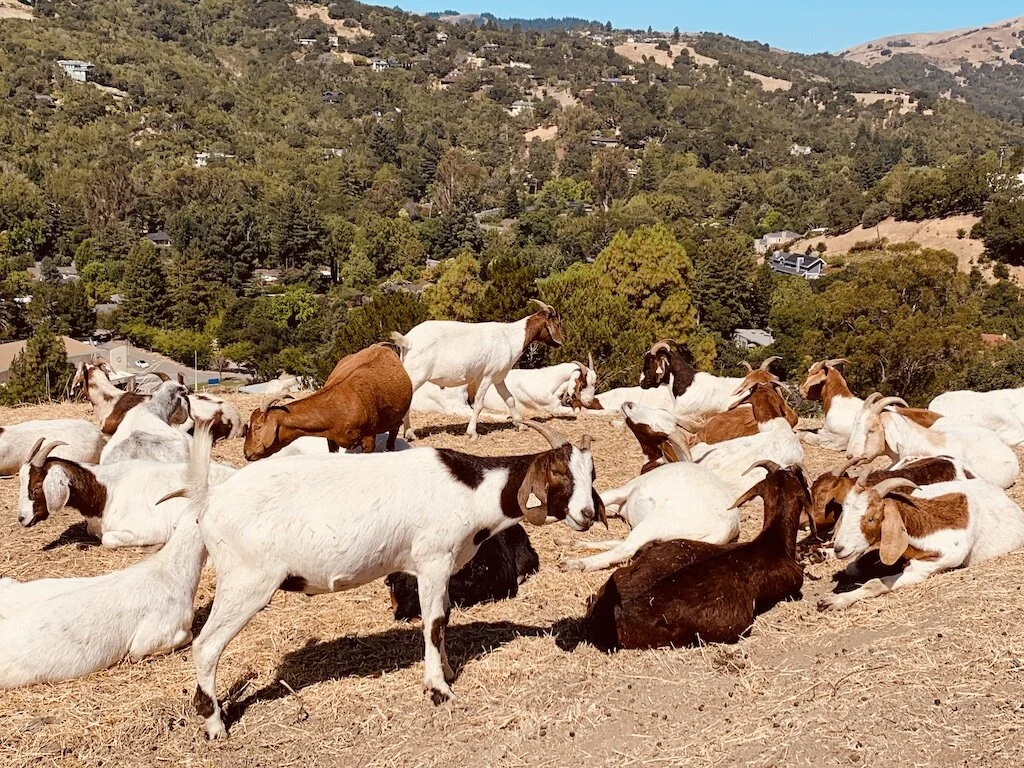
The goat herd wishes you all an engaged, restful, and powerful month ahead. There is so much work to do… stay focused. Rest often. Show up.
INTENTIONS | 11.5.2020
Dear Herders,
Dr. Ayana Elizabeth Johnson, the climate scientist behind ocean justice, discusses how to stay engaged in a world with so many overwhelming obstacles and setbacks. In a recent panel, Johnson offered how:
“We need artists to help us envision a good vision of the future so that we run towards it instead of sauntering away from the apocalypse. We need everybody and all of these skills.” -Dr. Ayana Elizabeth Johnson
As America continues to unveil its racism and denial of climate change, among other things, it’s easy to feel disheartened and exhausted. As a white woman with my own work to learn and unlearn, I’ve found (depending on the day) both hope and despair in the world of art, poetry, stories, and more.
With the message from Dr. Johnson, regarding what artists bring, I’d like to welcome you to The Herd’s Second Annual Fall Harvest. Each year, around this time, we get to celebrate the works of fellow Herders and what they’re up to these days. Be sure to explore below for a new podcast by Mason Fernandez, several poems by the wonderful Kaitlyn Spees, fiber art and poetry by Cindy Rinne, new fiction by Karla Brundage, new artwork by Julia Rigby, a little poem by me Allie Rigby, a short story & world of ceramics by Arlen Ståhlberg, and beaded earrings by Emily Nadel.
And check out all the Happenings, listed at the end of this newsletter too—including an upcoming Discussion Series by featured Herder Zeina Baltagi, who is the Artist-in-Residence at 11:11 Gallery, and exploring issues around surveillance and the policing of common spaces.
And now, I will let the following artists let their works speak for themselves. It was an honor and a joy to find each submission in my mailbox.
-Allie
P.S. Thank you for taking your time to read The Herd. I look forward to building this community with you, and as always, I am always open to feedback as this space continues to evolve and grow.
SECOND ANNUAL FALL HARVEST!
In order of appearance, we are lucky to share with you the works and world of Mason Fernandez, Kaitlyn Spees, Cindy Rinne, Karla Brundage, Julia Rigby, Allie Rigby, Arlen Ståhlberg, and Emily Nadel. Take your time here, and come back after a little screen break (always encouraged). I find something new in each poem, each podcast episode offered, and each visual piece each time.
As always, please feel free to leave a comment below, or give a shout-out to any of the artists whose words & visuals moved you, or made you feel something in your core… and of course, check out their works that exist outside of this collection here too.
Mason Fernandez Offers “Stacks on Stacks” — A New Podcast for Reading Fanatics
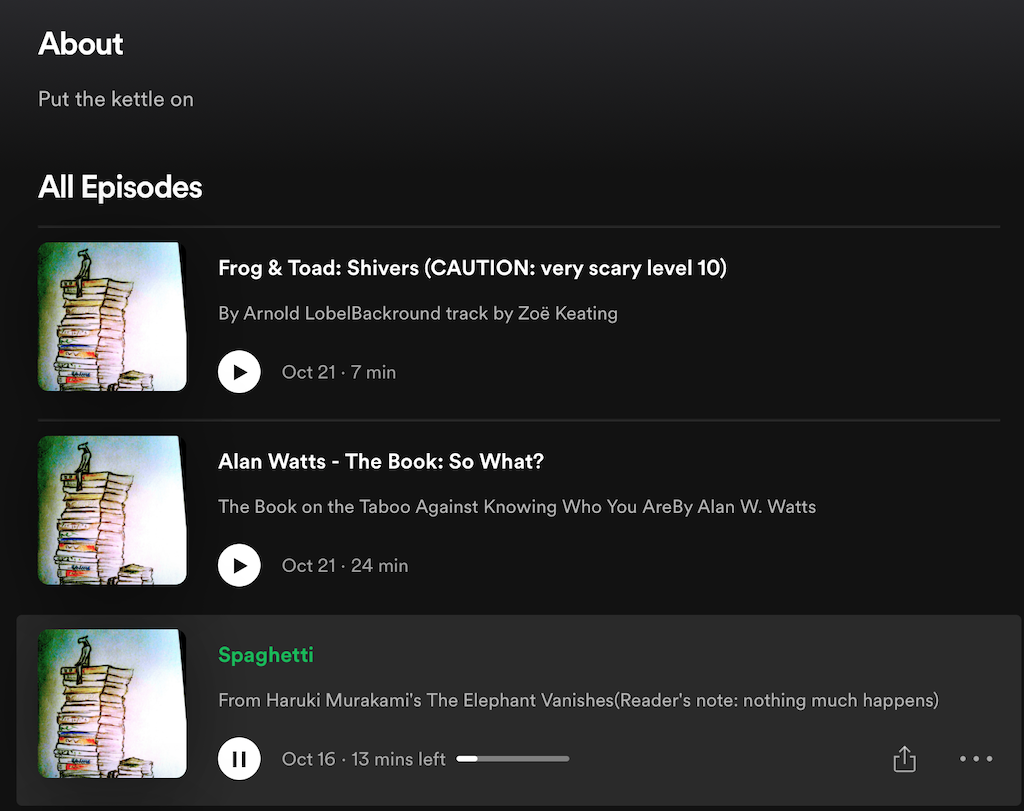
Some people just have a natural soothing radio voice, and a knack for making you feel like you’re in the room with them. Mason Fernandez is one of those people. His inflection of different character’s voices has me cracking a smile, while also getting lost in the stories he reads.
Check out Mason Fernandez’ new podcast Stacks on Stacks, available on Spotify, Apple Podcasts, Overcast, and more! What are you waiting for? “Put the kettle on…”
P.S. A great way to support the people behind a podcast you love is to rate their podcast and leave a written review! It goes a long way.
Brief bio: My name's Mason and I like reading and being read to and I hope you do to! This podcast is about reading books and having a good time!"
Kaitlyn Spees: A Collection of Four Poems
On school openings*
or
My Mother is a badass and I’m scared
“The kids are coming through next week to pick up
The stuff they left behind in the classroom” she tells me
Casually in late May. I pause, bike half-unlocked.
“Uh, could the teachers who maybe aren’t sixty
Take the lead on that?” I ask. I guess I’m being selfish
But I really don’t care. “I have to be an example for the kids,”
She answers, “I’ll wear a mask. I won’t let them hug me.”
I’ve seen my mother, pre-pandemic, standing
Forehead to forehead with students for check
For fevers so I just say “ok Mom. I love you. Be safe.”
“I’m not sure what to do,” she admits, “With the copies
Of Tuck Everlasting I sent home with them in March.”
I suggest bleach, but she says she’ll just collect the books in a bin
And not touch them for at least a month.
*Note from the poet: “Pretty self explanatory […]. But there was a feeling of helplessness, a guilty wish that the main political prizefight was anything but my mother’s profession.
Wishes and Fishes – Aquarium Is Washing Old Wishes To Pay Bills During Pandemic*
“If wishes were fishes we’d all have a fry”
And the fountains are filled with wish-laden coins
So swap wishes for fishes to keep fish alive.
Old wishes turn stagnant; they oxidize
Or grow biofilm slime. Such spoiled
Fishy wishes aren’t fit for a fry.
So dredge up the wishes, the pennies and dimes,
And scrub them with salt or soak them in oil:
Swap wishes for fish feed. Keep the fishes alive.
And watch wishes darting, after they’re shined,
Like shoals through our wallets – we want to enjoy
Our wishes and fishes. Coins are just small fry,
Just bait on the wish-hook, most of the time,
Till all wishful fishers together have sown
Enough penny-wishes to keep fish alive.
If small fish wish together then fewer will die,
Which leads to what’s been called a wash-wishy point:
Share wishes and fishes – and we’ll all have a fry;
We need fishes and wishes to keep all alive.
*Note from the poet: “[…] I read an article about an aquarium draining a fountain and dredging up the coins to keep themselves going during the pandemic and I’m always a sucker for situations where an object is both something physical and something abstract.”
Doc Holliday’s Dead from Coronavirus*
And Wyatt Earp’s chest is tight with grief
While he delivers the eulogy and drags
Himself back out on the job; his friend is
Dead it’s no time to let a summer cold
Hold him home. The heat’s leaving
Everyone uncivil and Wyatt feels like
Hammered crap so who can blame him
If he cracks a few more heads than normal?
And the whores in their whorehouse are
Dropping like flies from whatever foreign bug
Kate Harony’s imported. She’s taken
To her room, silly woman, but Wyatt Earp
Won’t shed any crocodile tears except
When he coughs till exertion leaves
His eyes and nose streaming – understand,
The dust is vicious.
*Note from the poet: “I saw a post somewhere which said something along the lines of “The reason why America isn’t recovering from Covid as quickly as other countries is because we are a country that values individualism over collectivism. Nobody here wants to do anything that is a minor inconvenience to them in order to protect their neighbors” so I found myself thinking about cowboys – that ideal of rugged individualism – and coronavirus. It’s kind of funny and quite sad how easily all the ugly elements fall into place. I have to say that I deeply disapprove of this poem because I feel like the Wyatt Earps of the world are not the people to whom we should be paying particular attention right now. I was surprised to find myself empathizing with some aspects of my Wyatt Earp – I was raised to appreciate the virtue of “put up and shut up” so the notion of, like, taking sick days, not just powering through, and publically admitting ill health feels really scary. Anyhow :/”
Palm Sunday 2020*
It would have been a strange Palm Sunday this year:
the throngs and coats and palms all
A little obscene. But of course Christ’s ass
Didn’t clip-clop down my wide suburban streets
Where bedraggled pastel surgical masks flop
Along the road in the wind like cliché tumbleweeds.
It rained while I ran across the Dumbarton Bridge
This past Palm Sunday down to an old pier
On the east side that I hadn’t known about.
I expect it’s a little industrial and desolate under
Even the best conditions but between the gray and the wet
And the global pandemic no one was out there
Though signposts encouraged fishing. So I eyed
The little shore-birds with their skinny legs and clerical collars
And I raced one lone goose till it startled into flight
When I laughed at the platplatplat
Of it’s webbed feet on the wet ground.
The sun on the way home put in
A belated appearance, streaming ropily through clouds,
And through the wet windshields of the passing cars I saw
Masks looped around rearview mirrors alongside
The ubiquitous rosaries. So when a middle-aged
Unmasked woman covered her face while I passed
I offered a close-lipped smile to reassure her: I
Was holding my breath too.
*Note from the poet: “Originally this was going to be much longer, last all the way to Pentecost, and include lines like “I miss the Eucharist the way I miss/ Skin” but I couldn’t figure out how to carry it all that way so I ended up cutting back a fair amount.”
Cindy Rinne: Fiber Artist, Poet, and More
Belly Cry
The disgruntled went outside, cast a chain around the sun
and pulled it down. They lassoed the pink moon and yanked
it out of the sky. Stars fell like tears.
Earth Mother gasped at the bombardment. The skin
surrounding the planet collapsed.
Color faded on the Tree of Life as creation reversed.
Confused animals and birds clashed in the chaos.
A cry rose from the belly of every person
as the world began to disappear. The deafening sound
woke the roots of plants which intertwined to hold
the earth together. Trees raised their branches
to enfold the sky. Green Tara and Lilith broke the chain
and unraveled the rope. Threw the sun and moon back into orbit.
Captured those who dared to rip the cosmos.
People, never forget the day your globe almost extinguished.
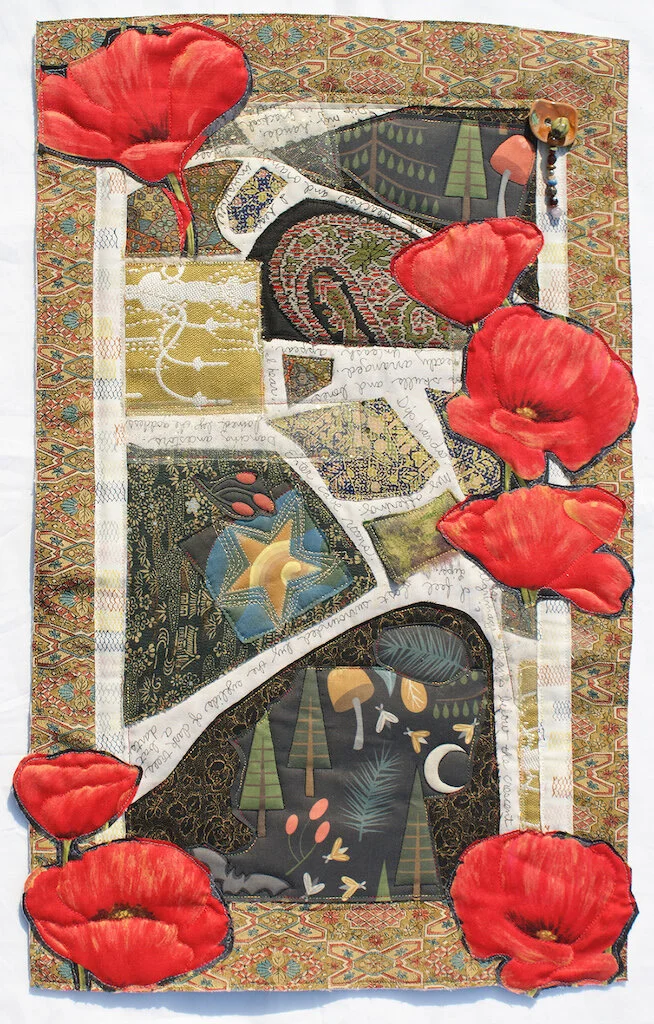
Cindy Rinne’s “Bear Goddess,” 23 x 14.” Check out Fiberverse for more of Cindy’s work!
Artist bio: Cindy Rinne creates fiber art and writes in San Bernardino, CA. Cindy is the author of several books: silence between drumbeats (Four Feathers Press), Knife Me Split Memories (Cholla Needles Press), Letters Under Rock with Bory Thach, (Elyssar Press), and others. Her poetry appeared or is forthcoming in: Anti-Heroin Chic, The Poetry Barn, Verse-Virtual, LitGleam, and others. Check out www.fiberverse.com or @fiberverse for more.
Karla Brundage’s New Fiction, “The Best Time to Kill an Elephant”
This brand new piece by Karla Brundage titled The Best Time to Kill an Elephant was published in Literary Kitchen on November 1st. The entire piece and ending are absolutely incredible. Full story available here.
Brief Bio: Karla Brundage is a Bay Area based poet, activist, and educator. Born in Berkeley, California in the summer of love to a Black mother and white father, Karla spent most of her childhood in Hawaii where she developed a deep love of nature. She is the founder of West Oakland to West Africa Poetry Exchange (WO2WA) and is a board member of the Before Columbus Foundation. Her poetry, short stories and essays have been widely anthologized and can be found in her book, Swallowing Watermelons, as well as Hip Mama, Literary Kitchen, Lotus Press, Bamboo Ridge Press, Vibe and Konch Literary Magazine.
Julia Edith Rigby: Visual Artist & Sculptor
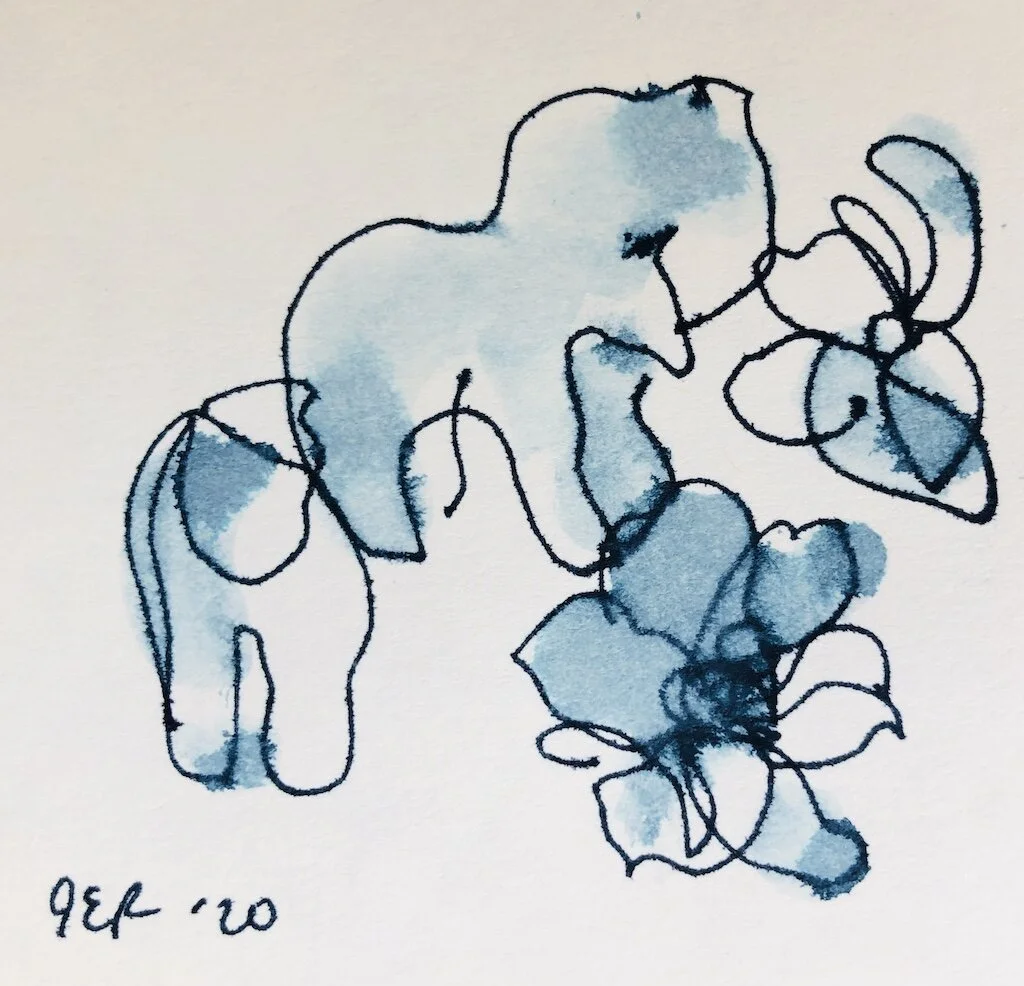
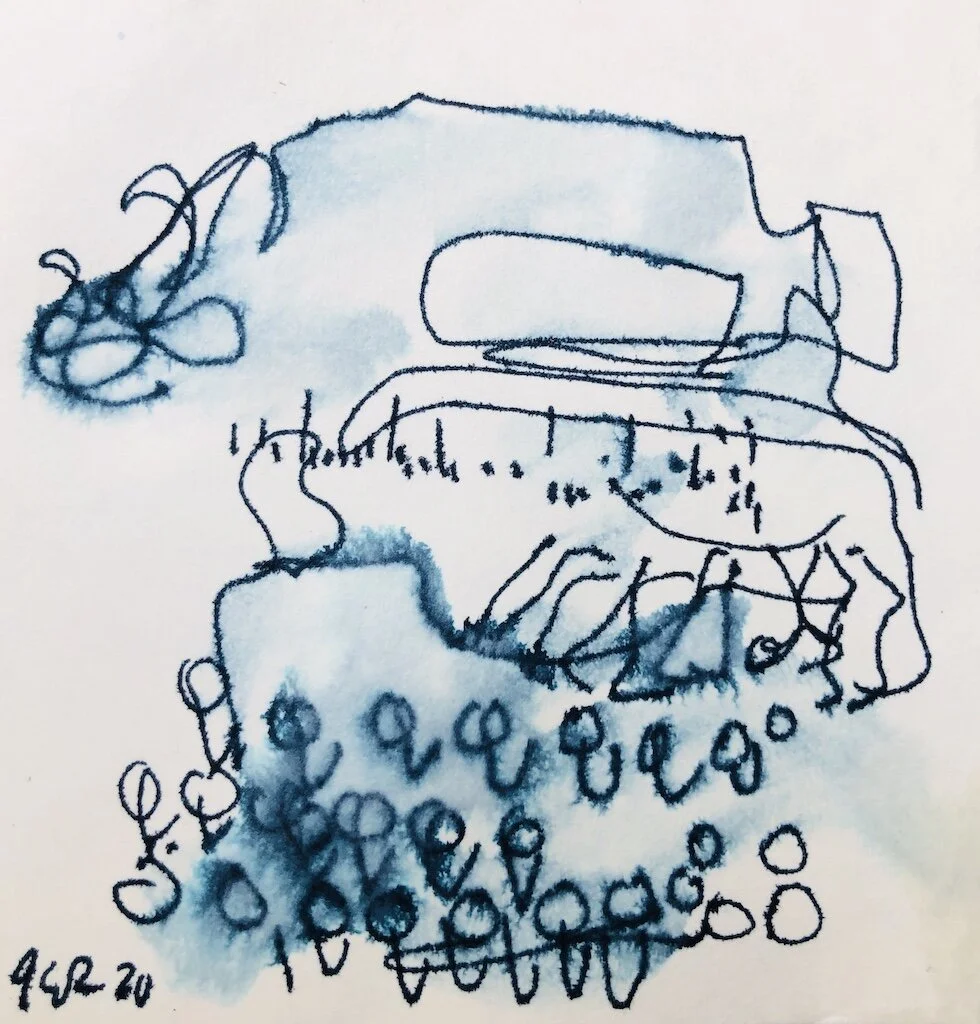
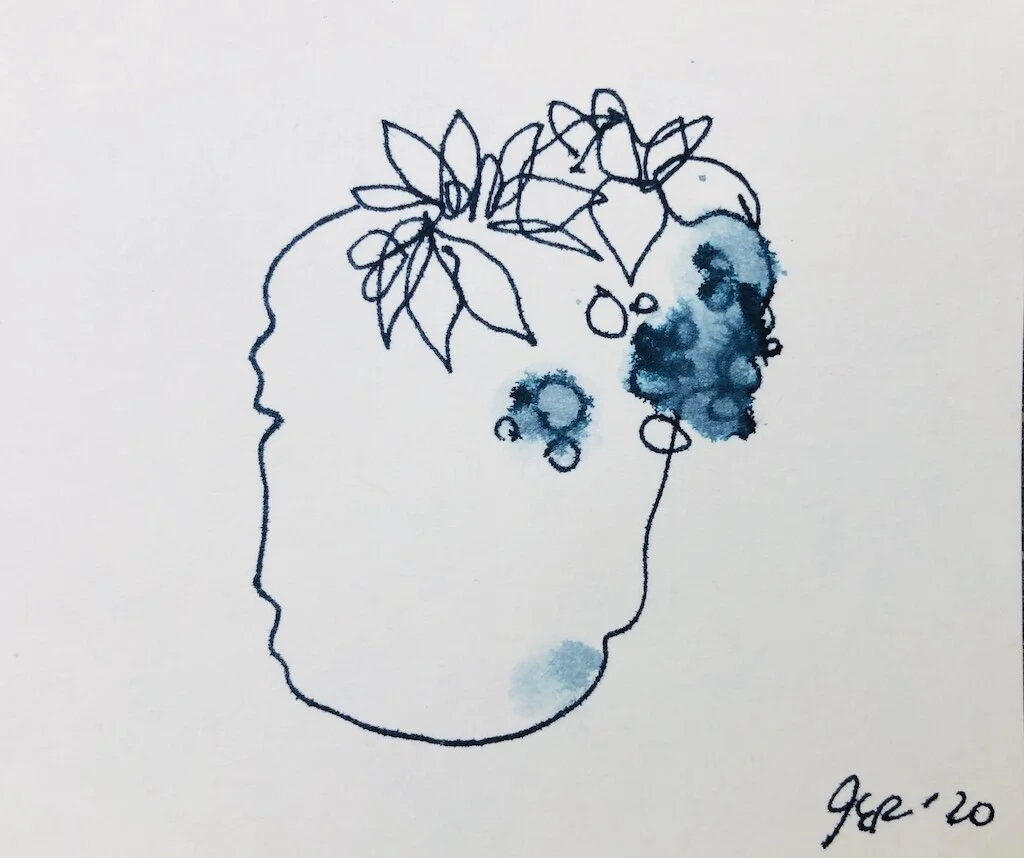
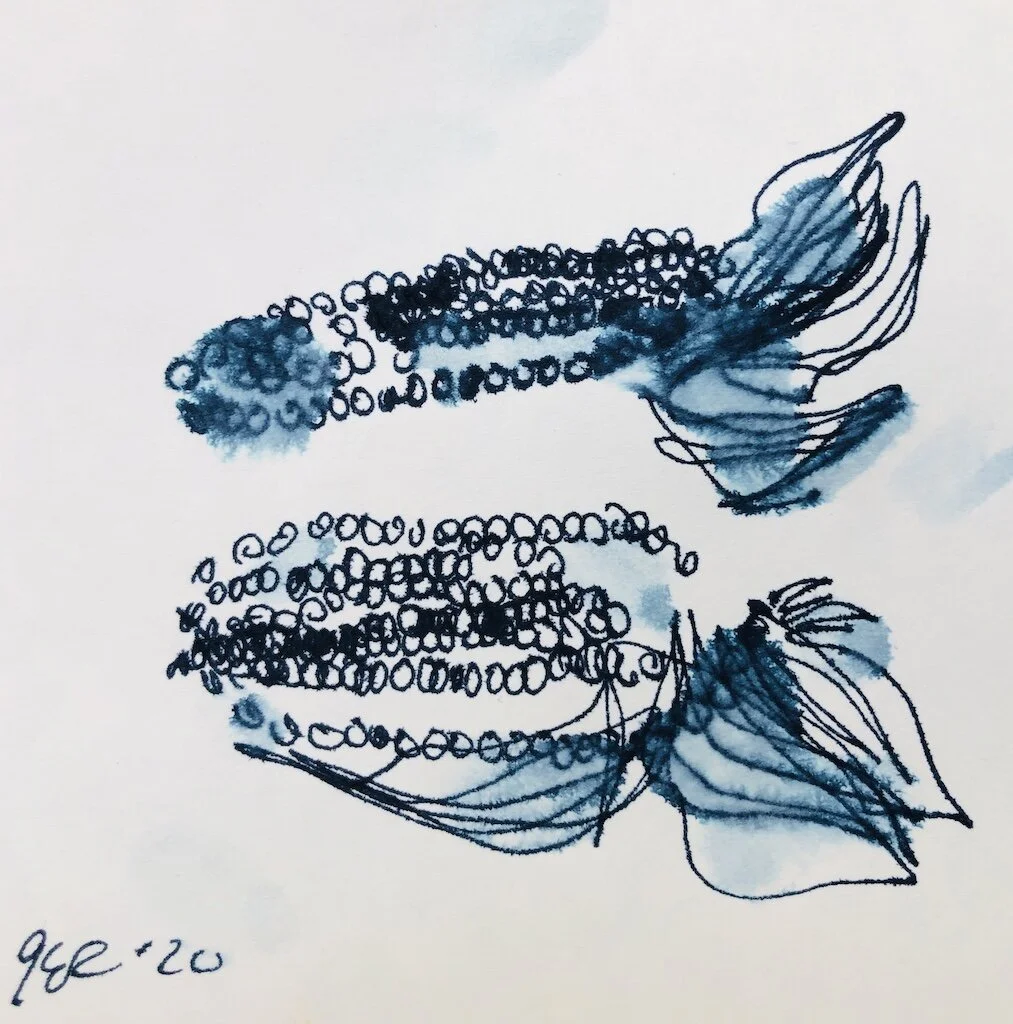
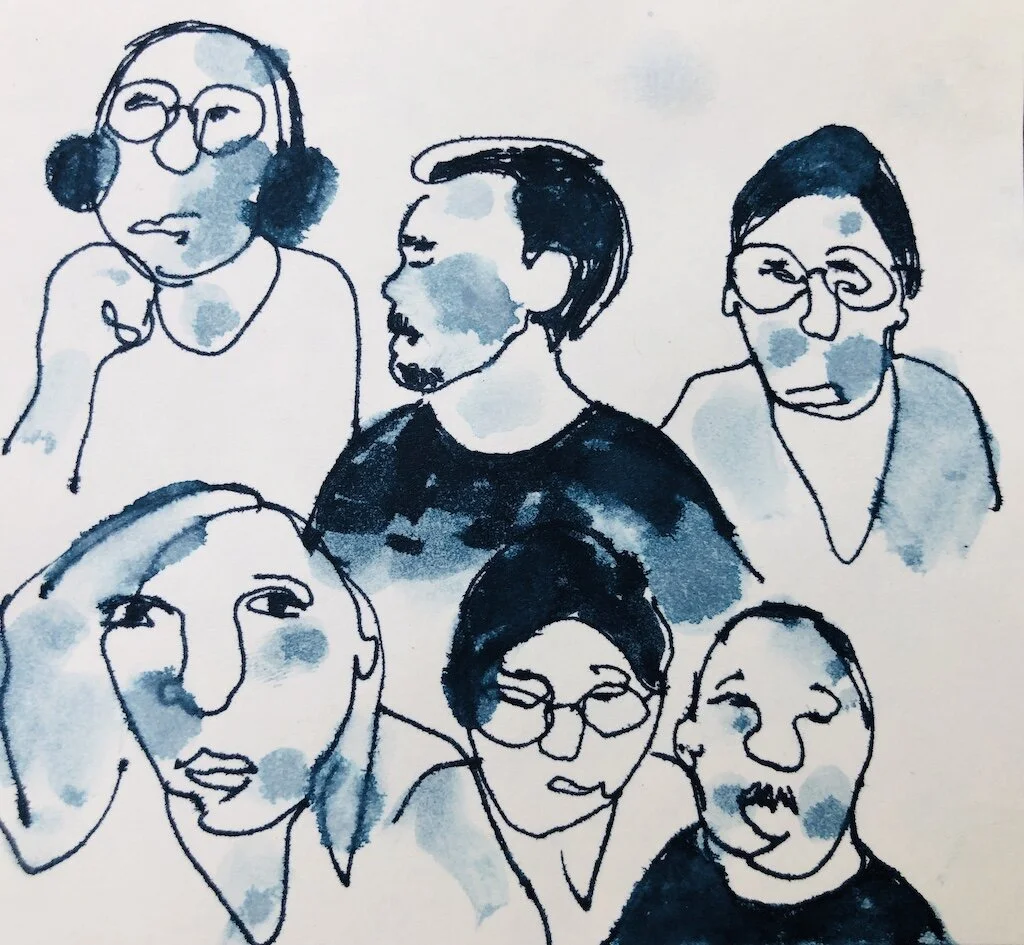
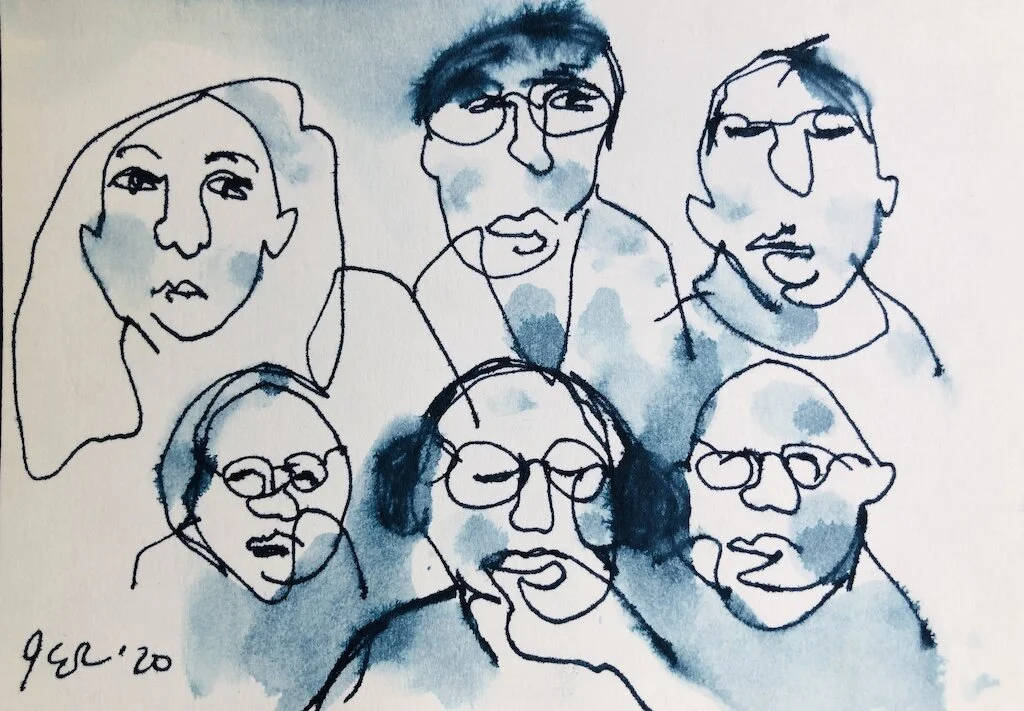
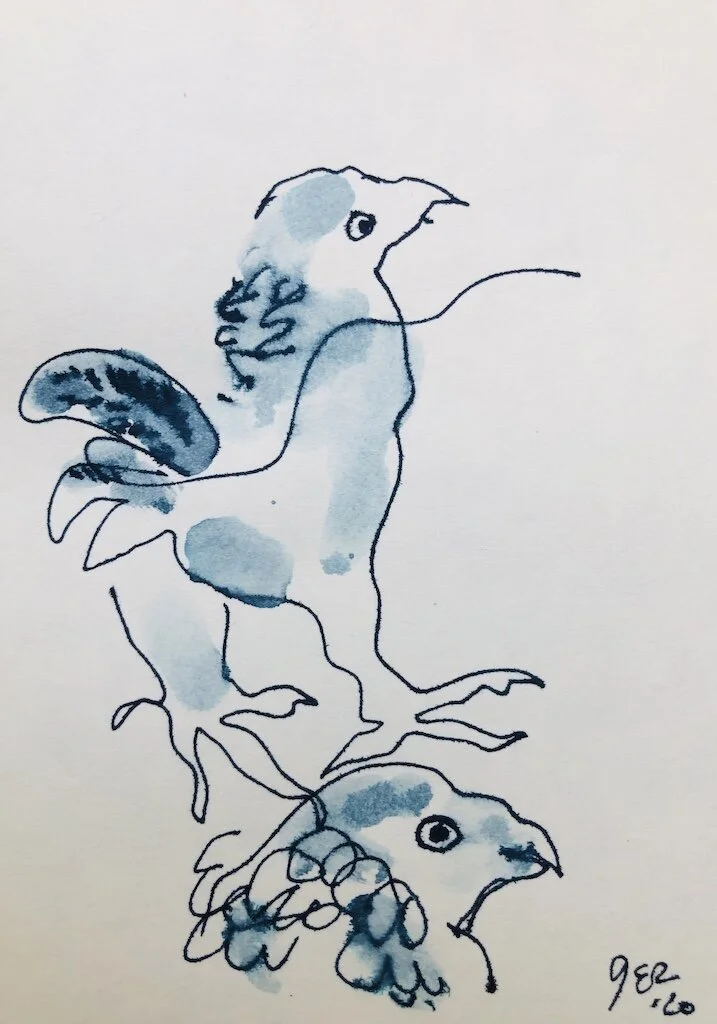
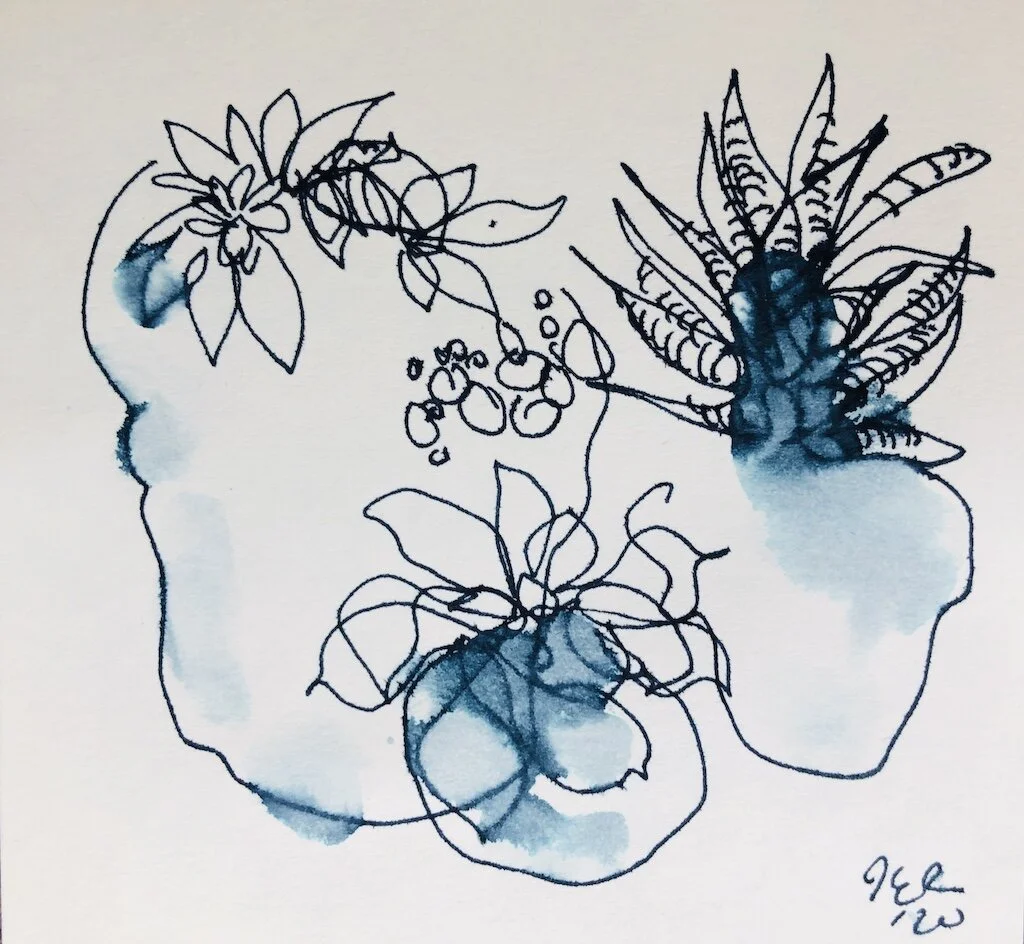
From the artist: “I made these blind contours in a recent drawing class with Caz Azevedo, a fellow artist who is teaching art classes online this fall.”
Check out Caz Azevedo’s website and explore those class packages, and click on any of the images below to explore Julia Edith Rigby’s website too.
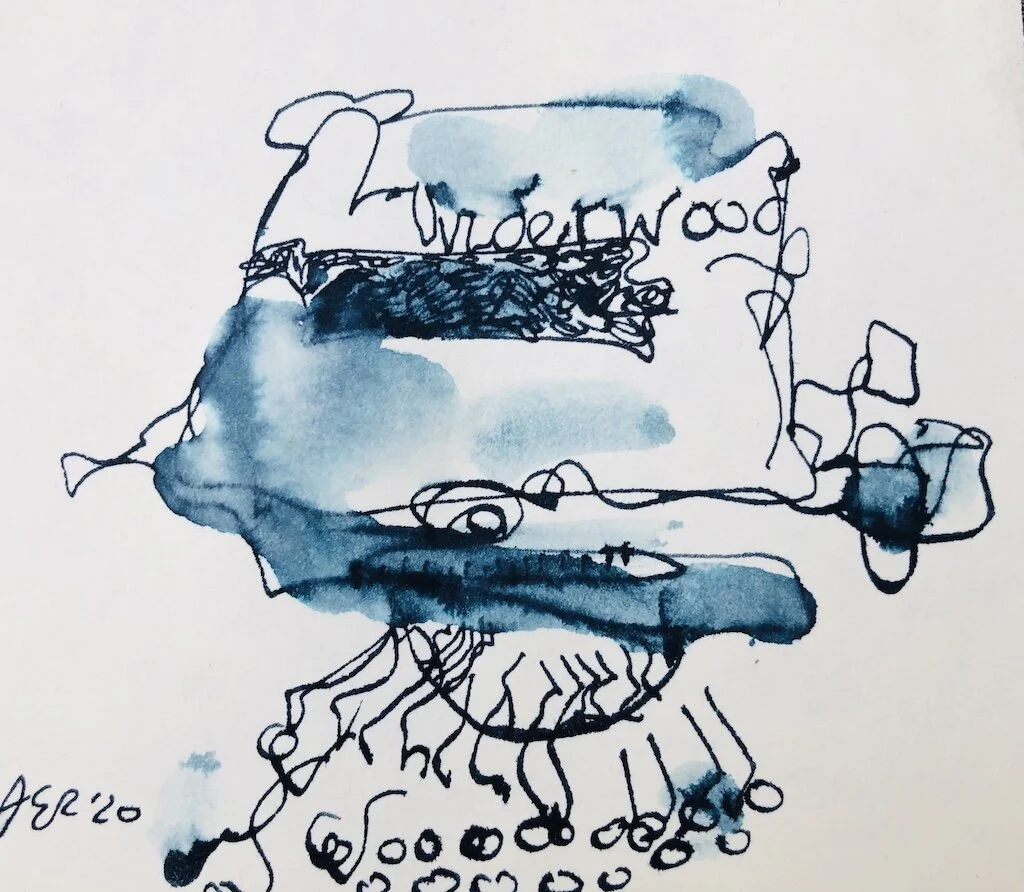
Julia Edith Rigby offers 9 “Blind Contour” Drawings Made in a Caz Azevedo class.
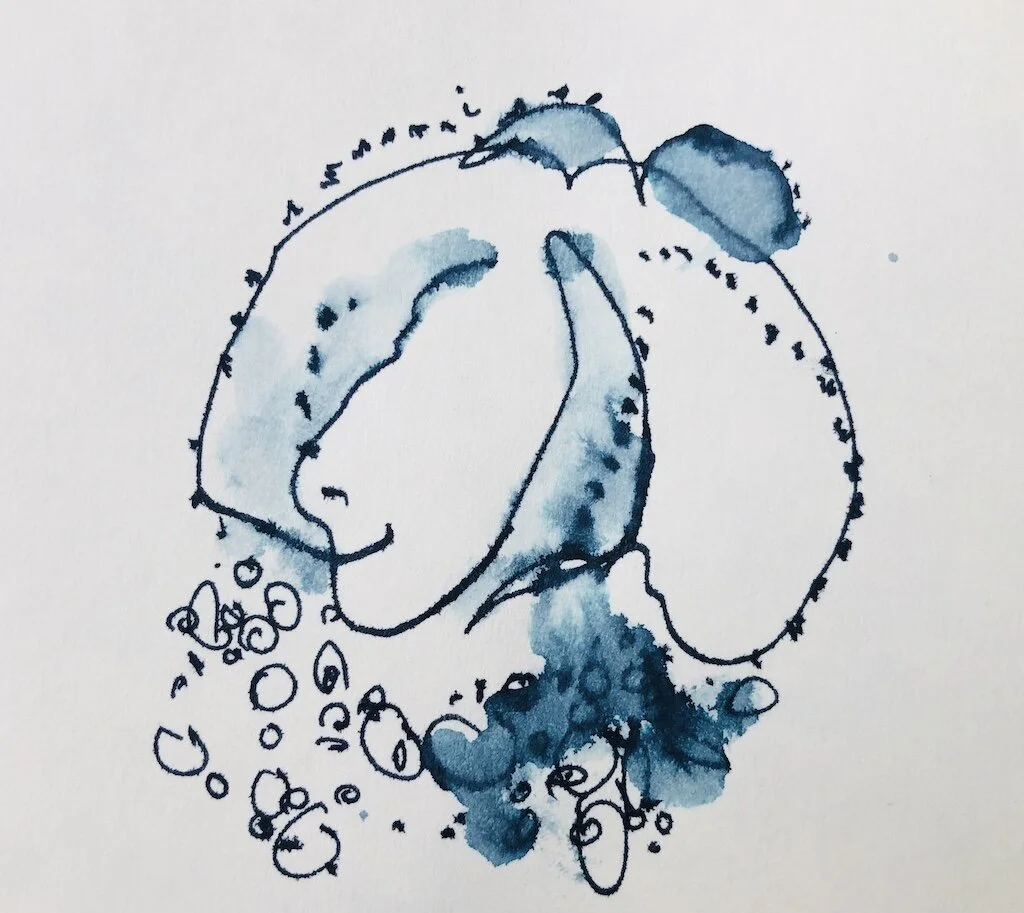
Julia Edith Rigby offers 9 “Blind Contour” Drawings Made in a Caz Azevedo class.
Allie Rigby Writes of Acorns
“On Acorn Weevils and This Year and Next”
acorn weevils
drill into acorns.
long, thin snout,
lay eggs in the nut:
food for the grubs,
pop out when ready,
burrow in soil,
hatch, grow, etc.,
the cycle spins
light blinks red
repeat.
\\
if you could halt a tree
before it could have been,
would you?
weevils, unaware
how beautiful,
a world
with more oaks…
//
and the oak?
she’s laughing,
her limbs shake so,
each winter storm
another ring to core,
yes, she’s laughing
and sometimes
she’s crying, knotted
eyes on the fire,
imagining and
planning all the work
for hundreds
or thousands
more acorns
next year—the
one acorn,
that one tiny acorn
that might sprout.
Brief bio: Allie Rigby is a Bay Area poet and curator of The Herd. She’s currently pursuing a Master’s Degree in Creative Writing and dabbling in the world of short stories.
Arlen Ståhlberg’s 1978 Halloween & World of Ceramics
“HALLOWEEN 1978”
I CLOSE MY EYES AND THINK OF THE HOUSE, I smell sunshine, the sea, passions, sorrows, hear Irish folk songs. It was an old beach house with a ramshackle front yard. Mostly dirt. And a flowering Date Palm Tree. There was an open front porch. The front porch was painted a coral blush of the morning sky. On the morning sky front porch was a collection of plants, the frame from a sun bleached wooden wagon, a bamboo chair with a canopy. And love.
In the house was a wide open living room. The walls were Father Sky Blue. The floors were cornflower yellow and dulled by footsteps. The windows were sand glass. They shimmered sunlight into the wide open living room. The windows looked out onto the front porch and out onto the Date Palm Tree.
The kitchen walls were barely lavender. The kitchen shelves were softly rubbed pine, old. Grains and spices, Chinese herbs and teas crowded open cupboards. The kitchen separated itself from the living room with a high counter. There was no wall, there was no door. The kitchen looked out onto the living room and it looked out onto the front porch and it looked out onto the Date Palm Tree.
Gypsy rose colored* tall wooden doors covered the mistress bedroom.
an actual name of a paint I chose
Gypsy rose colored tall wooden doors opened in invitation.
Gypsy rose colored tall wooden doors closed in acceptance.
Baskets met in corner. Round open old baskets filled with yarns and lace. Square closed new baskets filled with panties in every color and mostly white. Light rays filtered through paper. White paper window shades, white paper lanterns, pink and green paper grasshopper wings. A big wooden framed bed covered with a Chinese flowered quilt filled the center of the room. It filled with center of my life.
Part 2
Children climbed the old porch stairs. Some were dressed as animals and some were dressed as fairy tales. Darkness came and some were dressed as ghosts. The pumpkin smiled.
My man Terry sat in the big worn yellow flowered chair. He wrote. His book on his lap, he wrote. He filled all the spaces of the page. He filled all the spaces of the old beach house. He filled all the spaces of me.
He was tall. He was six feet, two inches tall. His hair was long. His hair was beautifully curly, red blonde, long. He was beautifully big. I loved him. I wore his green flannel checked shirt. It fit me just fine. Huge.
I was gypsy rose and cornflower yellow and fully lavender and yarn and lace and filtered sunlight. I was children’s dreams and the pumpkin smile. I was dark and small and slim then. I am dark and small and slim now. My hair was long and black and curled wildly around my face. My hair is long and black and mixed with grey and curls around my face** I said “I’ll always love you” He said “you’d better” I do,
He died one night from too much passion and too much life. I was far away.
** 1978
“Hold a vessel in your hand and touch the earth”
In addition to her written work, Arlen Ståhlberg also just launched her new website, featuring an incredible selection of bowls, sprouted vessels, vases, and more.
You can now explore each handmade piece, and order in time for the holidays. Arlen’s website was designed by Petrut Ababei, who does custom web design and more. Click the image below to go directly to Arlen’s new website!
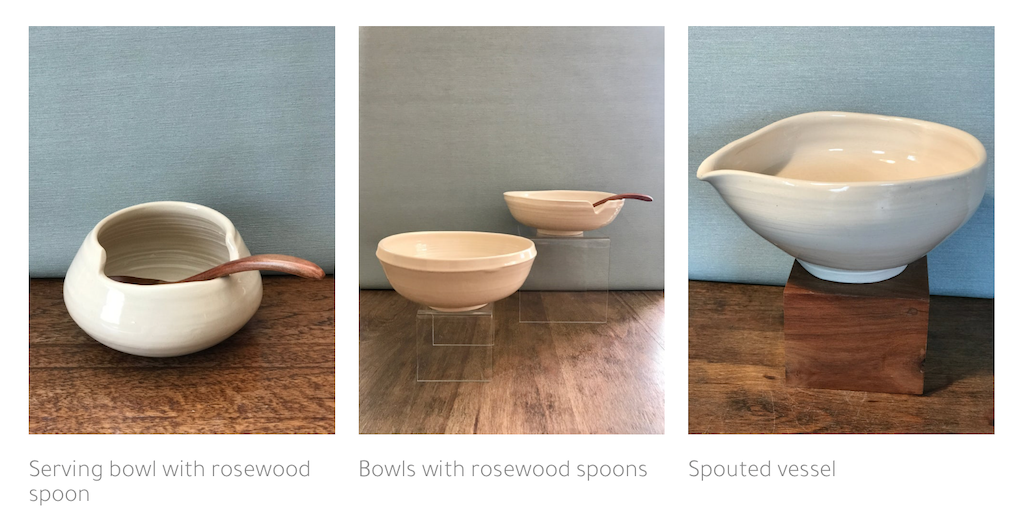
Arlen’s new website features her homemade pottery, and include vases, serving dishes, spouted vessels, and more.
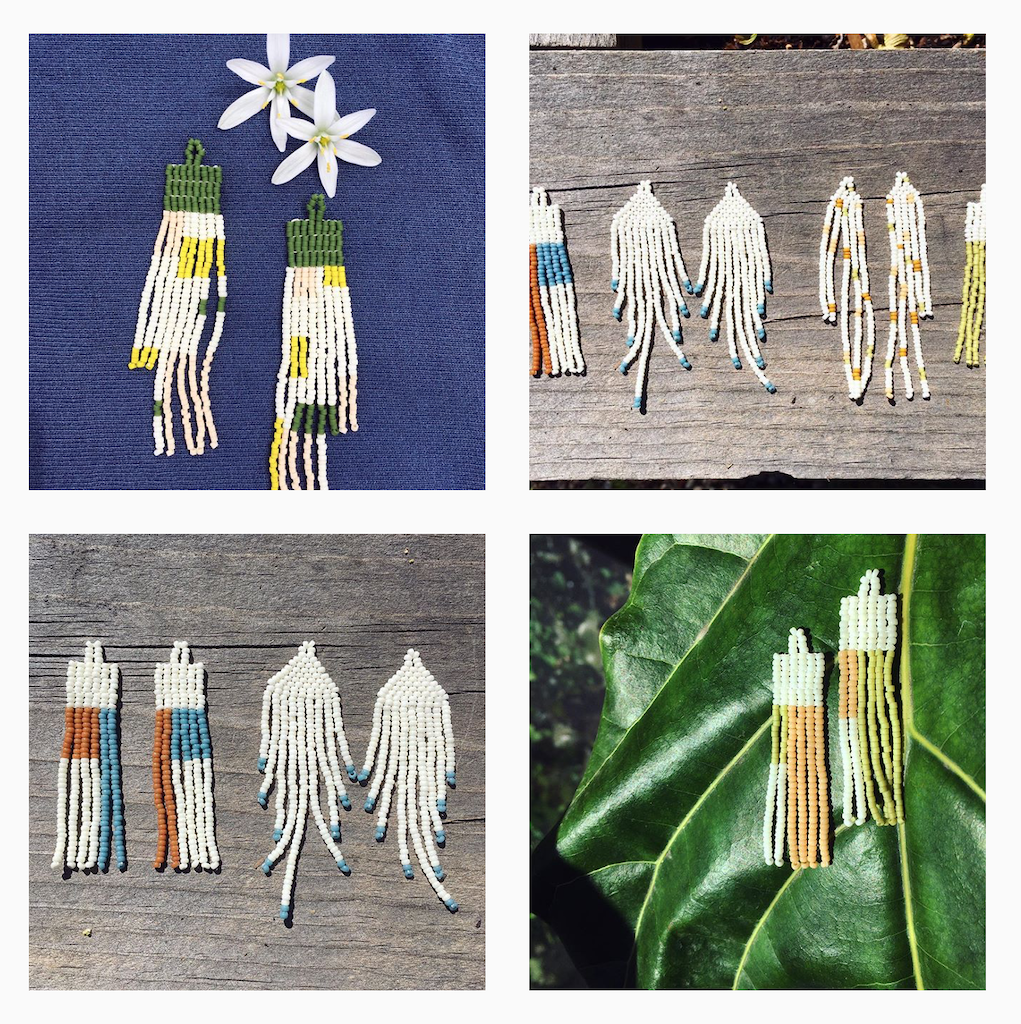
Emily Nadel makes beautiful earrings and homemade clothing. Follow her on Instagram and DM for custom orders!
QUICK LIT REVIEW | 11.4.2020
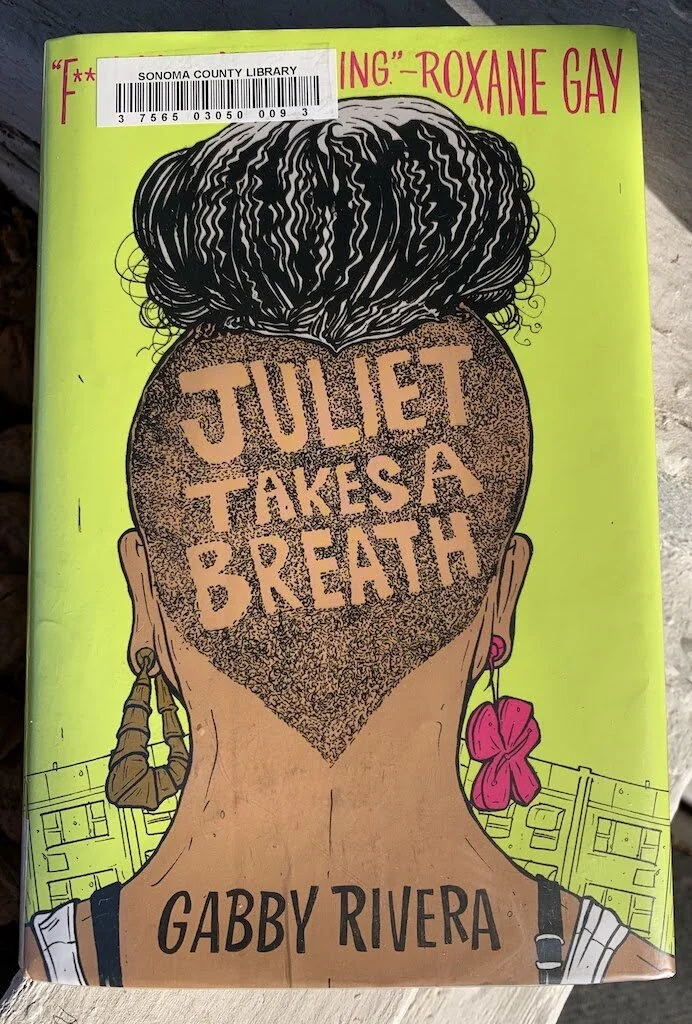
Gabby Rivera Delivers a Much-Needed YA Novel in Juliet Takes a Breath.
Coming of age. Portland. Mixtapes. Internships. Learning the system. Disrupting the system.
As the book jacket describes, “Juliet Milagros Palante is a self-proclaimed closeted Puerto Rican baby dyke from the Bronx” (Rivera). Juliet leaves home for a summer internship with the “legendary” feminist author Brisbane Harlowe—who is white and often unaware of how her whiteness. As Juliet’s summer unfolds with joys and disappointments, she also is busy exploring her newly out queer identity, friendships, and crushes, while also experiencing the ongoing pitfalls of Harlowe’s white feminism—and also sharing a house together, meaning, no break from Harlowe.
As Roxane Gay quotes on the cover, Rivera’s book is “F***ing Outstanding.” Gabby Rivera delivers a captivating read with stomach-drop moments, break-ups, social critique, and multiple epiphanies. As her mom says over the phone, “Let go of whatever expectations you had of this woman (Harlowe) and her book and write your own. You must write. You will write,” (Rivera 272). And Juliet does…
HAPPENINGS | 11.5.20
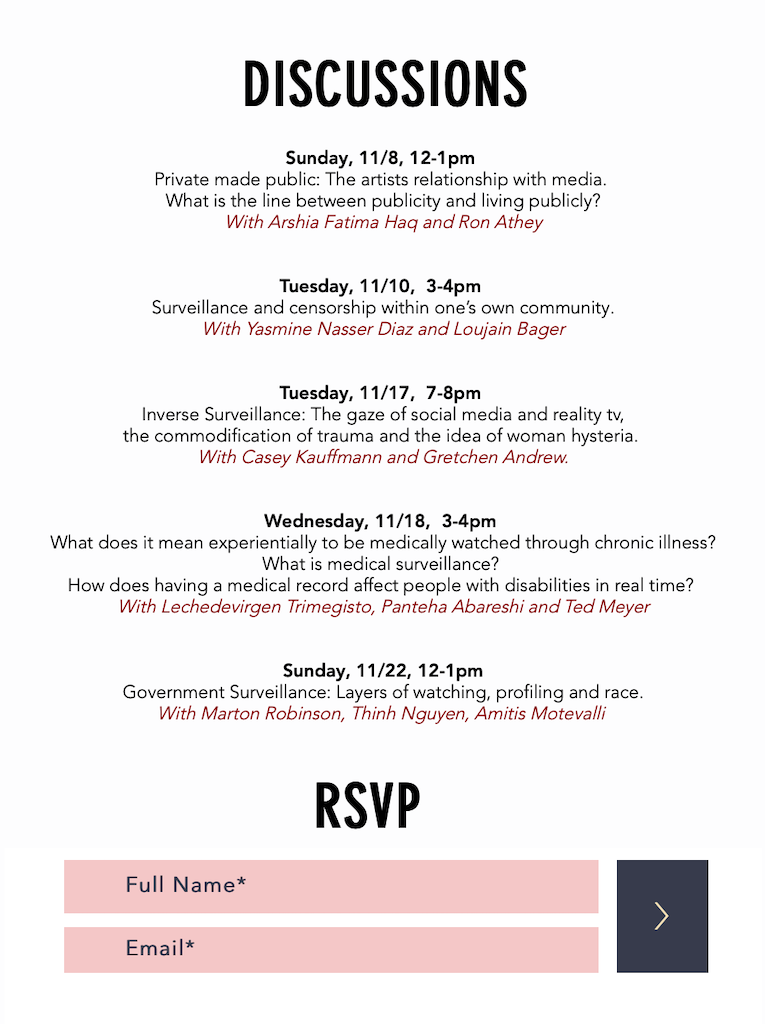
Click here to RSVP to any of the following discussions featuring artist Zeina Baltagi.
VIRTUAL: Terese Marie Mailhot on Craft - Saturday November 14th, 7:00AM PST. Free to enroll, with encouragement to purchase Mailhot’s books from your local bookstore. Heart Berries is incredible.
VIRTUAL: Claudia Rankine and Jericho Brown - Monday, November 16th, 5:00 PM PST. McArthur Fellow Claudia Rankine and Pulitzer Prize–winning poet Jericho Brown discuss Rankine’s Just Us, a collection on the mechanics of race in this country.
Featured Herder Zeina Baltagi is the Artist-in-Residence at 11:11 Gallery, now thru December 20th, accompanied with a lecture series. Explore the virtual exhibit and register for the upcoming discussions here! Topics this November range from “Private made public: the artists relationship with media” to “Government Surveillance: Layers of watching, profiling and race.” Register today!
Native American Heritage Month is all November - Check out the art from Indigenous Activists Launch Political Art Campaign Ahead of the Election, a collaboration by indigenous rights and visibility organizations Nia Tero and IlluminNative.
Why not enter the Soul-Making Keats Literary Competition? Guidelines here. Please submit by November 30th to be considered—and via snail mail so plan ahead!
From Moontide Press, there is an “open submission for our first anthology of 2021, Sh!t Men Say To Me: A Poetry Anthology Responding to Toxic Masculinity.” Open until November 15th. Learn more here!
VIRTUAL: Comité Noviembre National Puerto Rican Virtual Artisans Fair & Book Expo - Saturday, November 21st, 9:00 AM - 9:00 PM EST. “Support wonderful artisans and authors in the Artisans Fair & Book Expo by visiting each participants' page, shopping their handmade products, and sharing with friends!”
Featured Herder Tara K. Shepersky has an ongoing PenPal Project - check it out! Write a letter, support the work of this fine poet, and enjoy the communal exchange of snail mail.
VIRTUAL: Voices of California. A powerful reading happened on October 2nd with conversations on race, poetry, social justice, sense of place, and much more. If you missed it, check out the full recording, and consider supporting the Centro Cultural & Bookstore, Tía Chucha.
I’m a fan of Small Presses when it comes to submitting unpublished work. Lots are open right now for submissions. Why not give it a go?
That’s it for Issue XVI of The Herd. Feel free to comment below, or share The Herd with anyone who needs a lift.
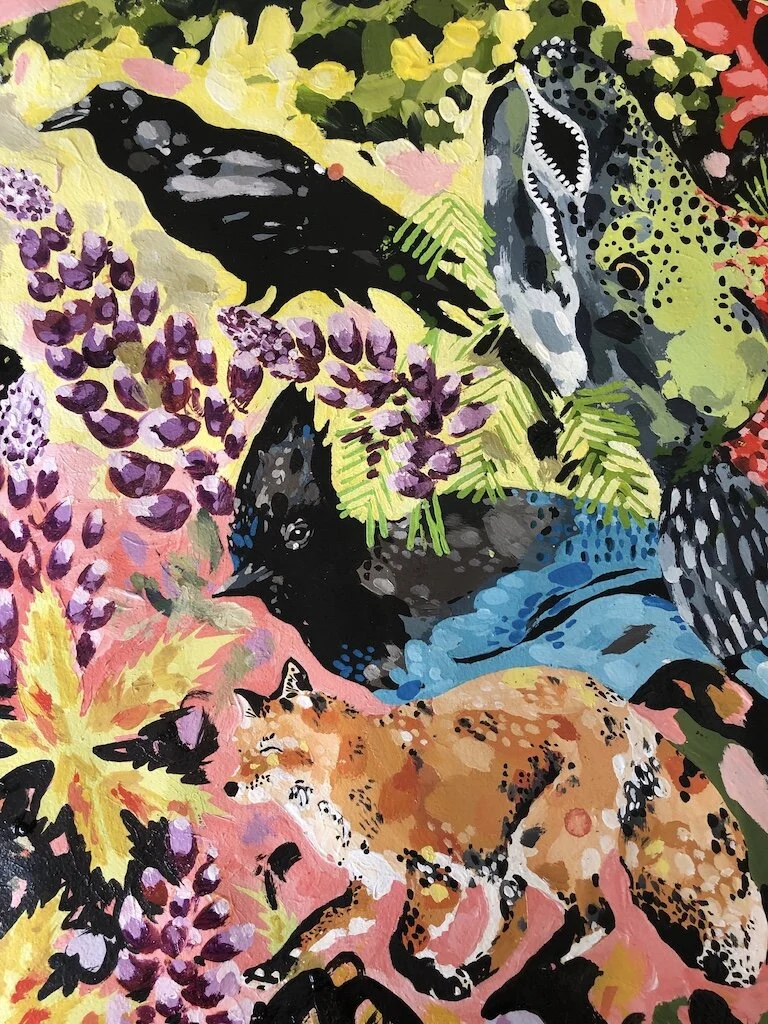
Artwork above provided by sister, supporter, and artist @JuliaEdithRigby.
The Herd is a literary newsletter that celebrates artistic expression and elevates artists who build community and foster connection.